Category: Soil Amendment

  • What Happens to the End Product of On-site Composting?

    What Happens to the End Product of On-site Composting?

    One of the most frequently asked questions we hear is: What can actually be done with the end product of on-site composting? The answer, like many things in sustainability, depends on the site, and the system in place to manage it.

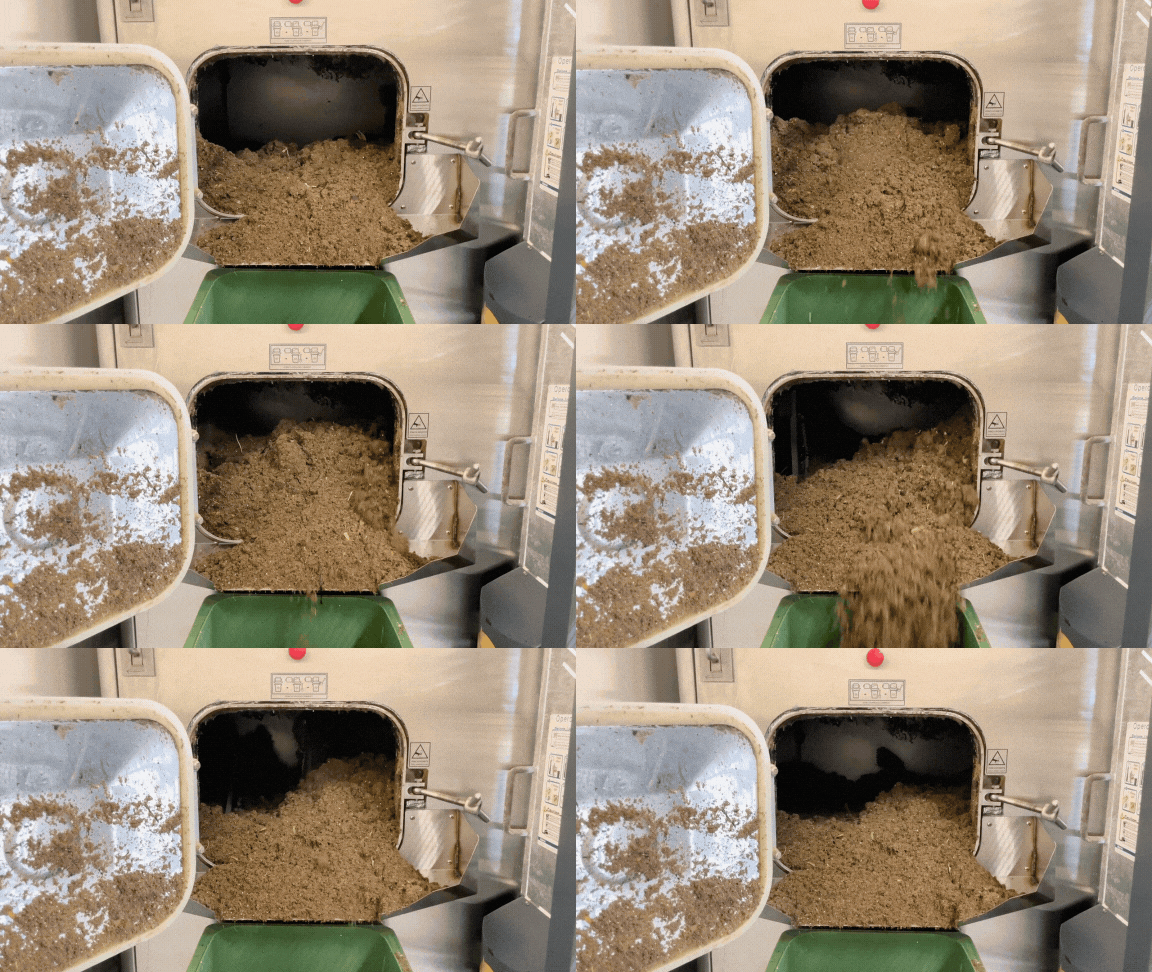
    At the core of on-site composting solutions is the production of soil amendment, a material rich in nitrates and other nutrients. However, this product isn’t quite compost yet. It typically requires time outside of the composter to properly cure, maturing into a stable, usable compost product. This phase is essential, especially if the end goal is to utilize it for landscaping, gardening, or green space maintenance.

    But curing requires space, and not every site has that luxury. On top of that, most commercial facilities generate far more soil amendment than they can realistically use.

    Ideally, sites can process all organic waste and reuse the resulting compost directly on their property or through community partners, creating a fully integrated closed-loop system. While many organizations aspire to manage their own outputs, the reality is that this isn’t always practical.

    Instead, we often see sites utilizing only a small portion of their compost outputs. Producing and applying compost in-house also requires dedicated space, time, and staff capacity, which introduces an entirely new layer of operational management that may not be feasible for every team.

    For operations like shopping centers, hospitals, or airports with limited storage or landscaping needs, managing the amendment on-site may not be feasible. These sites must consider how to close the loop through other practical and scalable end-use options.

    The Hybrid Model: On-site + Traditional Composting

    For many facilities, the most effective solution lies in a hybrid approach: using On-site composters to reduce organic waste volume before sending the remaining soil amendment to a centralized industrial composting facility.

    This model brings two major benefits:

    1. Reduced Hauling Costsand Emissions
      On-site composting can reduce the volume of organic waste by up to 80%, significantly cutting down the need for frequent hauling. Unlike raw organic waste, which must be removed regularly to avoid issues like odors and pests, soil amendment produced through on-site composting is more stable and easier to store. This allows facilities to hold material onsite for longer periods without the challenges associated with storing unprocessed organics.
      By reducing both volume and the urgency of removal, sites can schedule fewer hauls, lowering operational costs and emissions from transportation.
    2. Improved Diversion of Compostable Packaging
      Industrial composting facilities can reject commercial organic loads contaminated with compostable and non-compostable packaging. With the rise of look-alike compostable—items that appear compostable but aren’t—it’s becoming harder for these facilities to ensure clean streams. This leads to entire organics loads being landfilled due to contamination.
      On-site composters offer a key advantage in addressing this challenge. They can process compostable packaging materials on-site, breaking them down along with food waste into a soil amendment. Once in this form, the material is significantly less likely to be flagged or rejected by traditional composting facilities.
      Because on-site composting systems typically operate under more controlled conditions, facilities are better positioned to verify and manage the types of compostable packaging being used. This makes it far easier to ensure only accepted materials enter the stream, reducing the burden on end processors and increasing overall diversion. In short, breaking it down at the source creates a cleaner, more reliable output, and keeps more compostable out of the landfill.

    Why Closing the Loop Matters

    By integrating on-site composting systems with traditional composting infrastructure, organizations can improve waste diversion rates, reduce emissions, and support cleaner processing practices.

    More importantly, it allows for flexibility. Whether you’re a facility with ample land and landscaping needs or a high-density commercial site with limited space, there’s a pathway to creating a closed-loop organics system that works for you.

    In a time when landfills are reaching their limits and climate targets are tightening, every percentage of diverted waste counts. And when we think realistically about where the end product goes and the benefits of each pathway, we take another important step toward a truly sustainable system.

  • Fostering a Green Company Culture Through Employee Engagement in Sustainability

    Fostering a Green Company Culture Through Employee Engagement in Sustainability

    Sustainability isn’t just a talking point—it’s a practical necessity for companies aiming to thrive while making a positive impact. But sustainability efforts are only as strong as the people behind them. That’s why engaging employees is critical, and the T-REX Composter provides the perfect tool to bring sustainability to life. By turning food waste into nutrient-rich compost on-site, the T-REX Composter makes sustainability tangible, empowering employees to actively participate in reducing waste and improving environmental outcomes.

    Hands holding a wooden tray with three small plant seedlings in brown pots. Neutral background, focus on growth and nurturing. Cultivating green company culture.

    Why the T-REX Composter Drives Employee Engagement

    A Hands-On Sustainability Tool

    The T-REX Composter turns sustainability into something employees can see, touch, and contribute to daily. Instead of simply disposing of food waste, employees become part of a process that transforms waste into valuable compost. However, it’s important to note that only designated operators are authorized to run the machine. This ensures safe and efficient operation while maintaining employee involvement in waste separation and sustainability efforts.

    A Visible Commitment to Sustainability

    When employees see a T-REX Composter in action, it’s a clear signal that the company is serious about reducing its environmental footprint. Unlike temporary campaigns or generic recycling programs, the T-REX Composter is a long-term, impactful solution that shows sustainability is embedded in the company’s operations—not just a box to check.

    Inspiring Innovation and Ownership

    Employees involved in waste separation and tracking composting results often generate new ideas for reducing waste and utilizing compost effectively. Whether it’s streamlining waste collection or finding creative ways to use the finished compost, the T-REX Composter inspires innovation and gives employees a sense of ownership in sustainability initiatives.

    Building Team Spirit

    The T-REX Composter fosters collaboration. From organizing waste separation systems to tracking composting progress, employees work together to achieve sustainability goals. This teamwork boosts morale and strengthens bonds, creating a unified culture around shared environmental values.

    Making Sustainability Part of Daily Operations with the T-REX Composter

    Educate and Involve Employees

    Introduce the T-REX Composter to your team through hands-on demonstrations or workshops. Show them how food waste is processed and turned into compost, emphasizing the environmental and financial benefits. While employees play a key role in sustainability efforts, only trained operators handle the machine itself to ensure safety and compliance.

    Integrate Composting into Routine Tasks

    Make the T-REX Composter part of employees’ everyday workflows by establishing easy-to-use waste separation systems. While only operators manage the machine, employees can actively contribute by sorting waste properly and ensuring materials are compostable. This integration normalizes sustainability as a daily practice.

    Set Clear Goals and Track Progress

    Define measurable goals for your T-REX Composter, such as reducing landfill waste by a specific percentage or producing a certain amount of compost. Share progress with employees regularly to keep them engaged and celebrate milestones together.

    Encourage Employee-Led Initiatives

    Empower employees to take charge of sustainability projects, like managing waste streams or finding uses for the compost produced. While only trained operators can run the machine, broader employee involvement builds a sense of ownership and ensures the program’s long-term success.

    The T-REX Difference

    Adopting the T-REX Composter doesn’t just benefit the environment—it transforms your company’s approach to sustainability:

    • Tangible Environmental Impact: Divert significant amounts of organic waste from landfills while reducing greenhouse gas emissions.
    • Cost Savings: Eliminate or minimize waste hauling costs while generating a valuable soil amendment for landscaping or community projects.
    • Boosting Employee Engagement: Provide a practical way for employees to contribute to sustainability efforts, increasing their connection to the company’s mission.
    • Reputation Building: Demonstrate leadership in sustainability to customers, stakeholders, and the wider community.

    A Shared Mission

    Incorporating the T-REX Composter into your operations is more than an environmental initiative—it’s a catalyst for cultural change. By involving employees in waste transformation and sustainability efforts, you create a workplace where everyone feels invested in making a difference. While the T-REX is operated exclusively by trained personnel, its presence and impact inspire employee engagement in sustainability. The T-REX Composter isn’t just a tool; it’s a bridge between company goals and employee action, driving meaningful progress for your business and the planet.

  • Boosting Soil Health and Odor Management with On-Site Composting

    Boosting Soil Health and Odor Management with On-Site Composting

    As businesses strive for more sustainable and efficient operations, on-site composting is gaining traction as a powerful tool. Beyond minimizing waste and cutting down on hauling costs, this approach brings two often-overlooked but crucial benefits, improved soil health and effective odor management. Below are some of the reasons why these advantages are encouraging more companies to switch to on-site composting and how they can transform your sustainability strategy.

    Hidden Benefit of On-Site Composting ― Nurturing Soil Health

    Healthy soil is the unsung hero behind thriving landscapes and agricultural productivity. On-site composting turns your organic waste into a nutrient-rich soil amendment resource that enriches soil structure, supports beneficial microorganisms, and promotes long-term soil health in the right conditions. Unlike chemical fertilizers that may deliver a short-lived boost but risk depleting the land over time, soil amendment fosters a balanced, regenerative environment.

    The soil amendment created through on-site organics and post-consumer packaging composting helps improve water retention and soil aeration, which in turn leads to healthier plant growth and greater resilience against erosion. For businesses with landscaping needs or agricultural interests, this results in robust, fertile soil that supports sustainable growth year after year. The process of transforming waste into a valuable soil amendment embodies a circular approach to sustainability that not only reduces waste but enhances natural ecosystems.

    Debunking Odor Management Myths

    A common misconception about composting is that it comes with inevitable, off-putting odors. However, on-site composting can be managed effectively to keep odor concerns at bay. By maintaining a balance of carbon-rich and nitrogen-rich materials and ensuring proper aeration, businesses can create the ideal environment for composting that minimizes unwanted smells.

    The advantage of on-site composting over traditional waste handling methods lies in the control it offers. When organic waste is left to sit for days before being transported, decomposition can lead to unpleasant odors that affect operations and relationships with neighboring properties. On-site composting systems address this by processing waste promptly, reducing the potential for odor development. This is especially important for businesses operating in urban or densely populated areas where maintaining a clean and pleasant environment is a priority.

    Why It Matters for Your Business

    Adopting on-site composting isn’t just about being eco-friendly; it’s about making smarter, more resource-efficient choices that benefit your bottom line and your reputation. Enhanced soil health means sustainable landscaping or agricultural practices that align with a company’s commitment to the environment. Composting in-house adds value by producing a consistent supply of organic material that keeps soils healthy without relying on synthetic inputs.

    Effective odor control further strengthens your company’s operations by ensuring positive community interactions. Businesses that prioritize these aspects send a clear message that they’re committed to thoughtful, comprehensive waste management that considers both environmental impact and practical, day-to-day needs.

    Future of Sustainable Operations ― From Waste to Resource

    The shift to on-site composting is about more than reducing waste; it’s about redefining waste as a resource. By embracing composting practices that enhance soil health and manage odors efficiently, companies can transform their waste management from a cost aspect into a strategic advantage. This approach promotes sustainability, supports long-term growth, and solidifies the business as a leader in environmentally conscious practices.

    Elevate your waste management strategy and join the growing number of businesses transforming their sustainability game with on-site composting. Enhanced soil health and effective odor management aren’t just benefits—they’re the pillars of a smarter future.

  • Soil Amendment: What It Is and How to Use It

    Soil Amendment: What It Is and How to Use It

    Soil amendments are a crucial practice for those seeking to optimize the health of their agricultural and garden soils. While natural soil can be inconsistent in nutrient levels, texture, and water retention, the use of soil amendments helps address these issues. The T-REX Composter, with its advanced technology, provides a sustainable way to create high-quality soil amendments, transforming organic waste into a valuable resources.Comprehensive Maintenance Plan for Your T-REX Composter

    Understanding Soil Amendment

    Soil amendments are materials added to soil to improve its physical properties, nutrient content, and overall structure. Unlike fertilizers, which directly supply nutrients to plants, soil amendments enhance the soil’s capacity to support plant growth. This includes improving aeration, water retention, drainage, and nutrient availability. The T-REX Composter produces a rich compost that serves as an excellent soil amendment, offering a balanced blend of organic matter that boosts soil health.

    Why Soil Amendment Is Important

    Most soils are far from perfect. They can be too sandy, or simply lacking in organic matter. These conditions can lead to poor plant growth, waterlogging, or drought stress. Soil amendments help to address these issues by modifying the soil’s structure and composition. For instance, the compost generated by the T-REX Composter can loosen compacted soil, improving root penetration and water movement, while also helping sandy soils retain moisture and nutrients.

    How to Use Soil Amendment from the T-REX Composter

    Before applying any soil amendments, it’s essential to conduct a soil test to understand your soil’s needs. This will guide you in determining the right amount and type of amendment to use. Once you have your results, incorporating compost from the T-REX Composter is straightforward.

    For existing agricultural soils and garden beds, spread a layer of compost about 1-2 inches thick over the soil surface. Then, gently work it into the top few inches of soil. This method improves the soil structure and introduces essential nutrients gradually, promoting long-term soil fertility. In new areas with very poor soil, you can incorporate a thicker layer, around 2-4 inches, to give your plants the best possible start.

    The compost from the T-REX Composter is particularly effective because it is fully decomposed and rich in organic matter. It not only provides nutrients but also supports beneficial microbial activity in the soil, which is vital for plant health. Additionally, regular application of compost helps maintain soil structure, preventing compaction and ensuring that your plants receive the water and nutrients they need.

    Benefits of Regular Soil Amendment

    Using compost from the T-REX Composter as a soil amendment offers numerous benefits. It enhances soil fertility by adding essential nutrients and organic matter, improves soil texture, and increases the soil’s ability to retain moisture. Over time, this leads to healthier plants, higher yields, and a more resilient farmland and garden ecosystem.

    Moreover, by using compost as a soil amendment, you contribute to sustainable gardening practices. The T-REX Composter turns food scraps and other organic waste into a valuable resource, reducing landfill waste and promoting a circular approach to agriculture and gardening. This not only benefits your garden but also helps in conserving natural resources and protecting the environment.

    Soil Amendment gallery image

    In Summary

    Soil amendments are an essential practice for any farmer or gardener looking to improve soil health and plants. The T-REX Composter provides a convenient and eco-friendly way to produce high-quality compost, which can be used to amend your soil effectively. By regularly incorporating this compost into your land and garden, you can create a fertile, well-structured soil that supports plant growth and a thriving farmland and garden ecosystems.