
Tag: compost

  • Grants for Composting Systems in Canada: Funding Your On-Site Waste Transformation

    Grants for Composting Systems in Canada: Funding Your On-Site Waste Transformation

    Investing in composting infrastructure is one of the most effective ways for businesses, municipalities, and institutions to reduce organic waste, minimize hauling costs, and improve environmental performance. However, the cost of purchasing and installing an industrial or community-scale composter can be a challenge.

    Across Canada, multiple government programs and funding opportunities exist to help offset these costs. From federal initiatives to provincial and municipal funding, these grants support organizations that want to implement sustainable waste management solutions.

    This guide provides a detailed overview of the available composting and waste diversion grants in Canada and how they can help fund the purchase and installation of composting systems such as the T-REX Composter by Terraforma Systems.

    Why Composting Grants Matter

    Government funding programs are designed to encourage waste diversion and greenhouse gas reduction by supporting composting infrastructure. Grants help organizations:

    Whether you manage a resort, zoo, university, corporate campus, or municipality, composting grants can make implementing on-site composting more financially accessible.

    Federal Composting Grants and Funding Programs

    1. Food Waste Prevention and Diversion: Research and Capacity Building Fund (Environment and Climate Change Canada)

    This federal program supports research, pilot projects, and capacity-building initiatives that reduce food waste and divert organic materials from landfills. While it does not typically fund large-scale equipment purchases, it can support pilot installations, data collection, and training programs related to composting.

    Eligible applicants: Local governments, Indigenous organizations, and nonprofit entities

    Funding coverage: Up to $150,000 per project

    Best for: Pilot composting projects, research-based organics programs, and community demonstration systems

    2. Local Food Infrastructure Fund (Agriculture and Agri-Food Canada)

    The Local Food Infrastructure Fund (LFIF) supports community organizations, farms, and nonprofits working to improve food security. Composting equipment and installations that support food waste reduction or soil regeneration are eligible expenses.

    Eligible applicants: Nonprofits, Indigenous groups, community organizations, and farms

    Funding coverage: Up to $500,000 depending on stream and project scale

    Best for: Community composting projects and farm-based composting systems

    3. Green Municipal Fund (Federation of Canadian Municipalities)

    The Green Municipal Fund (GMF) helps municipalities invest in sustainable infrastructure, including waste diversion and organics management systems. Composting facility construction or on-site processing systems can qualify under its “Circular Economy” and “Waste” categories.

    Eligible applicants: Municipalities and partners

    Funding coverage: Grants and low-interest loans covering planning, pilot, or capital projects

    Best for: Municipal composting facilities, regional organics management projects

    Provincial Composting Grants and Support Programs

    British Columbia

    CleanBC Organics Funding Program (OFP)

    This program supports new composting infrastructure, organics collection systems, and processing technologies that reduce greenhouse gas emissions. It is the successor to the CleanBC Organics Infrastructure and Collection Program (OICP).

    Eligible applicants: Local governments, Indigenous communities, and non-profit organizations

    Funding coverage: Up to 66% of eligible project costs

    Best for: Large-scale composting installations and municipal partnerships

    Status: Currently under review for its next intake period

    Manitoba

    Manitoba Composts Support Payments

    This program provides per-tonne payments to licensed composting facilities based on the amount of organic material processed each year. It supports operational sustainability rather than capital purchases.

    Eligible applicants: Licensed composting facilities

    Funding coverage: Per-tonne incentive payments for organic material diverted from landfill

    Best for: Existing composting operations and long-term facility management

    Québec

    Recyc-Québec Funding and Prime-Vert Program

    Québec offers multiple funding programs that support composting infrastructure, soil improvement, and organic waste management. Recyc-Québec administers municipal and industrial waste diversion funding, while Prime-Vert supports agricultural and environmental initiatives.

    Eligible applicants: Municipalities, farms, and environmental organizations

    Funding coverage: 

    • Recyc-Québec: $75,000 to $500,000 per project, covers up to 70% of eligible expenses
    • Prime-Vert:Covers up to 70% of eligible costs, with a maximum of $10,000 per project

    Best for: Municipal composting, agricultural compost systems, and regional waste diversion projects

    Alberta

    Resilient Agricultural Landscapes Program (RALP)

    Part of the Sustainable Canadian Agricultural Partnership, this program supports projects that improve soil health and ecosystem resilience. Composting systems that produce soil amendments for agricultural use may qualify.

    Eligible applicants: Farmers and agricultural producers

    Funding coverage: Cost-share basis for approved projects

    Best for: Agricultural composting systems and soil improvement initiatives

    Other Provinces (Ontario, Nova Scotia, Saskatchewan, New Brunswick, PEI)

    These provinces often offer funding through municipal waste diversion programs, environmental innovation grants, or green infrastructure funding. Local and regional districts also provide smaller grants for composting, recycling, or sustainability education.

    Municipal and Regional Composting Grants

    Many municipalities across Canada offer localized funding or rebates for composting systems. Examples include:

    • Community environmental grants for composting education or equipment purchases
    • Waste diversion pilot programs supporting institutions and commercial facilities
    • Green business grants for sustainable operations
    • Rebates for on-site composting systems to reduce hauling and landfill costs

    To find active local funding, check your city or regional district’s environmental or waste management grant listings.

    Nonprofit and Foundation Funding

    Several foundations and corporate programs provide smaller grants for community composting, outreach, and waste reduction:

    Tips for Applying for Composting Grants

    • Define your goals clearly
      Identify how composting will reduce landfill waste, improve sustainability metrics, or contribute to food waste reduction.
    • Quantify your impact
      Estimate organic waste diverted, greenhouse gas emissions reduced, and compost produced.
    • Demonstrate collaboration
      Partner with local governments, schools, or nonprofits to strengthen your application.
    • Include technology and monitoring
      Highlight digital tracking or automation (for example, the Terraforma Systems IQ platform) to show measurable impact.
    • Prepare supporting documents
      Include a clear project budget, quotes for equipment and installation, and any letters of support or data tracking plans.

    Key Takeaway

    Government funding can make composting implementation far more attainable. Whether through federal programs like the Local Food Infrastructure Fund, provincial initiatives like CleanBC, or municipal community grants, there are opportunities across Canada to support composting equipment and infrastructure.

    By integrating technology-driven composting systems such as the T-REX Composter, organizations can access funding while achieving measurable progress toward Zero Waste goals and sustainability commitments.

    Funding programs and intake periods are subject to change. Some initiatives listed above may be temporarily paused. Always verify current eligibility and availability before applying.

    Interested in implementing an on-site composting solution?

    Contact us to learn more about the T-REX Composter today!
  • The Hidden Cost of Landfill Dependence in Modern Facilities

    The Hidden Cost of Landfill Dependence in Modern Facilities

    The System No One Questions

    Behind most large facilities, there is an area that rarely makes it into strategy meetings. It may sit behind cafeterias, along old commercial buildings’ loading docks, or besides industrial areas. Containers line the wall. Trucks arrive on schedule, empty them, and leave. The process feels routine and dependable. Because it has always functioned this way, it often goes unquestioned.

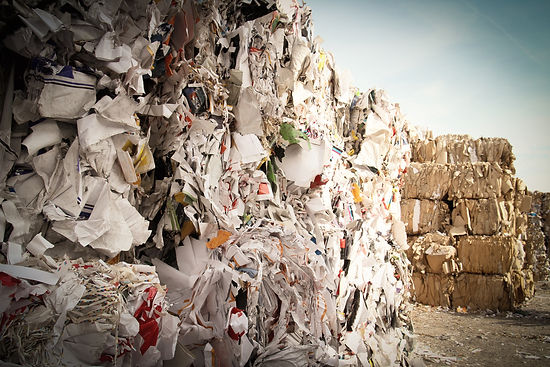
    Landfill disposal became the default decades ago, and for many organizations it still defines waste management. Yet default does not mean optimal. Over time, reliance on landfill creates layers of financial exposure and operational strain that are easy to overlook because they build gradually. A large portion of what many facilities send to landfill is recyclable, or organic materials such as food scraps and compostable items. When that material is buried instead of processed differently, the consequences extend far beyond the dumpster.

    The Growing Financial Weight of Landfill Waste

    Organic waste carries literal weight, and in waste management, weight drives cost. Food scraps and compostable materials add significant mass to containers, causing them to fill faster and require more frequent hauling. Every additional pickup increases transportation charges and landfill tipping fees. At first, these expenses appear manageable. Waste removal is simply another operating cost, absorbed into the annual budget.

    The pressure builds quietly over time. Hauling contracts are renegotiated. Disposal rates increase. Fuel costs fluctuate. In high volume environments and facilities’ operations, even small increases in pickup frequency can translate into meaningful annual expense. What once felt like a predictable cost becomes a steadily expanding obligation, tied largely to material that never needed to leave the property in the first place.

    The Overlooked Challenges Few Measure

    The financial impact tells only part of the story. Organic waste does not remain stable while it waits for removal. It breaks down quickly. Odors intensify, especially in warmer months. Sanitation teams must spend additional time managing cleanliness. Pest control demands increase. Storage areas fill rapidly, which can require added coordination to prevent overflow or emergency pickups.

    None of this typically triggers a crisis. Instead, it becomes background noise in daily operations. Staff adapt. Managers accept it as part of the workflow. Time and labor are quietly diverted to managing material that is simply waiting to be hauled away. Over months and years, this friction accumulates, affecting morale, efficiency, and the overall environment within the facility.

    Shifting from Disposal to Control

    Composting changes the structure of the problem. When facilities process organic material on site, the weight and volume of waste leaving the property decline significantly. Fewer pickups are required. Exposure to rising tipping fees is reduced. Budget forecasting becomes more stable because the organization is not entirely dependent on external disposal costs that it cannot control.

    Instead of repeatedly paying to transport decomposing material, the facility gains visibility into one of its largest waste streams. Organic waste becomes something measured and managed rather than something removed and forgotten. That shift alone can stabilize long term waste management costs and create a clearer understanding of operational performance.

    A Cleaner, More Predictable Operation

    The operational improvements are often immediate. With less organic material sitting in containers, odors decrease and sanitation improves. Storage areas remain cleaner and easier to maintain. Kitchens and loading docks operate with greater consistency because waste handling becomes structured rather than reactive.

    Staff time is no longer spent managing overflow or coordinating urgent pickups. Instead, processes become routine in a different way, built around internal management rather than external removal. In facilities where food preparation and high foot traffic are constant, this predictability supports both hygiene standards and overall workflow.

    Preparing for Regulatory and Reporting Pressure

    Waste management does not exist in isolation from broader trends. Regulatory frameworks in many regions are increasingly focused on organic waste diversion. Sustainability reporting expectations continue to evolve, and leadership teams are under growing pressure to demonstrate measurable environmental performance.

    Facilities that rely heavily on landfill disposal may find themselves needing to adapt quickly if requirements change. By implementing composting infrastructure proactively, organizations move on their own timeline. They can document diversion rates, strengthen ESG performance metrics, and demonstrate forward thinking operational management without waiting for external mandates to force action.

    The Environmental Reality Beneath the Surface

    When organic waste is buried in landfill conditions, it decomposes in a way that contributes to greenhouse gas emissions. Diverting that material through composting reduces environmental impact and aligns day to day operations with broader sustainability goals. Increasingly, stakeholders from employees to investors are paying attention to these decisions. Waste strategy is no longer invisible. It is part of how organizations are evaluated.

    Composting offers visible and reportable progress. It connects environmental responsibility with practical facility management in a way that is measurable and concrete.

    The True Cost of Waiting

    The most overlooked cost of landfill dependence is time. No single year feels dramatic. The increases in hauling expenses are incremental. The operational strain feels manageable. Regulatory expectations advance gradually. Yet each year that organic material continues to leave the facility as landfill waste represents ongoing financial outflow and missed opportunity.

    What could have been a deliberate transition becomes a reactive adjustment when external pressure intensifies. Familiarity with landfill systems can create a false sense of stability, but stability built on rising costs and growing scrutiny is fragile.

    Facilities that integrate composting into their waste strategy take control of one of their heaviest and most expensive waste streams. They reduce landfill exposure, create more predictable budgets, improve sanitation standards, and strengthen long term resilience. The decision is not only environmental. It is operational and financial.

    The cost of inaction rarely appears in a single invoice. It accumulates quietly. Organizations that recognize this early position themselves for stability and measurable progress rather than allowing gradual increases in cost and complexity to define their future.

  • What Happens to the End Product of On-site Composting?

    What Happens to the End Product of On-site Composting?

    One of the most frequently asked questions we hear is: What can actually be done with the end product of on-site composting? The answer, like many things in sustainability, depends on the site, and the system in place to manage it.

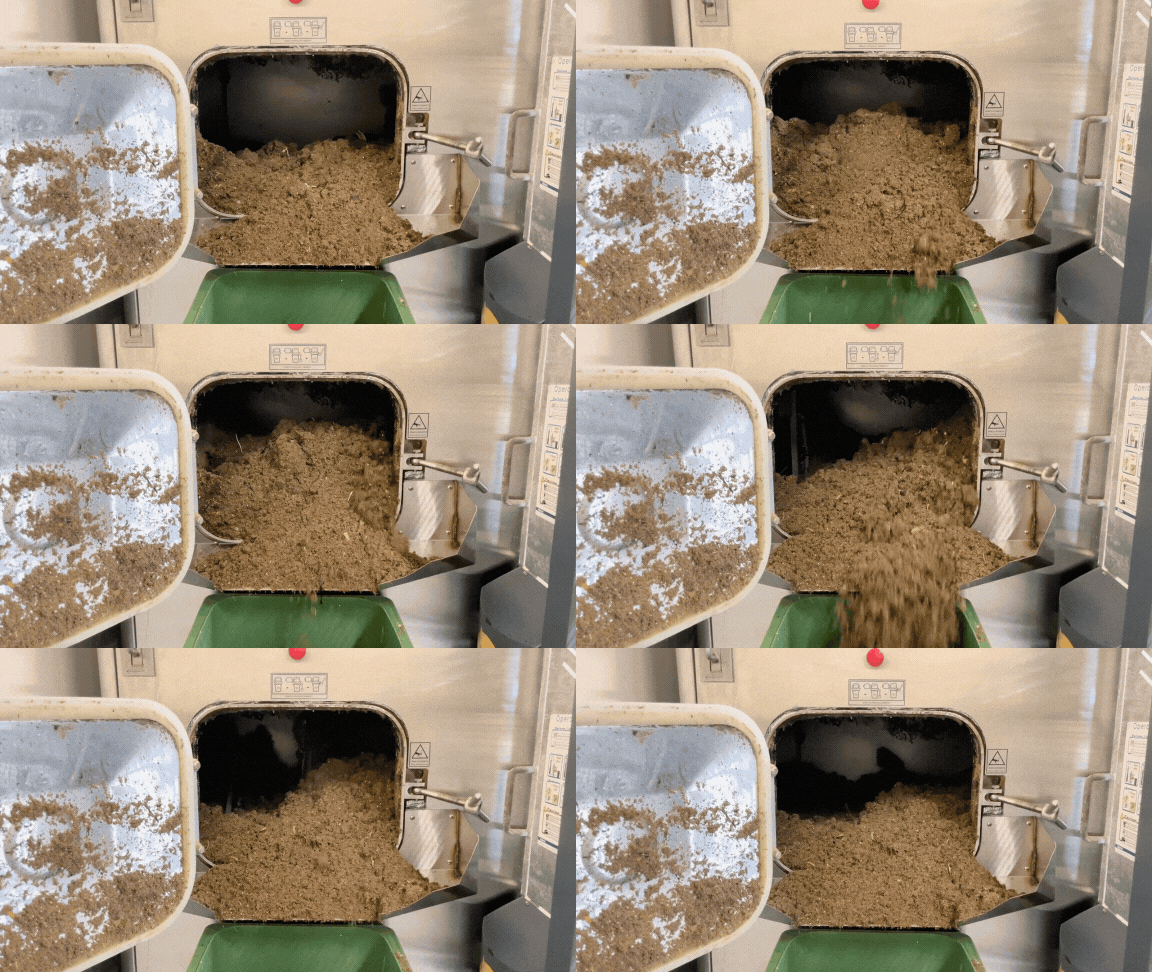
    At the core of on-site composting solutions is the production of soil amendment, a material rich in nitrates and other nutrients. However, this product isn’t quite compost yet. It typically requires time outside of the composter to properly cure, maturing into a stable, usable compost product. This phase is essential, especially if the end goal is to utilize it for landscaping, gardening, or green space maintenance.

    But curing requires space, and not every site has that luxury. On top of that, most commercial facilities generate far more soil amendment than they can realistically use.

    Ideally, sites can process all organic waste and reuse the resulting compost directly on their property or through community partners, creating a fully integrated closed-loop system. While many organizations aspire to manage their own outputs, the reality is that this isn’t always practical.

    Instead, we often see sites utilizing only a small portion of their compost outputs. Producing and applying compost in-house also requires dedicated space, time, and staff capacity, which introduces an entirely new layer of operational management that may not be feasible for every team.

    For operations like shopping centers, hospitals, or airports with limited storage or landscaping needs, managing the amendment on-site may not be feasible. These sites must consider how to close the loop through other practical and scalable end-use options.

    The Hybrid Model: On-site + Traditional Composting

    For many facilities, the most effective solution lies in a hybrid approach: using On-site composters to reduce organic waste volume before sending the remaining soil amendment to a centralized industrial composting facility.

    This model brings two major benefits:

    1. Reduced Hauling Costsand Emissions
      On-site composting can reduce the volume of organic waste by up to 80%, significantly cutting down the need for frequent hauling. Unlike raw organic waste, which must be removed regularly to avoid issues like odors and pests, soil amendment produced through on-site composting is more stable and easier to store. This allows facilities to hold material onsite for longer periods without the challenges associated with storing unprocessed organics.
      By reducing both volume and the urgency of removal, sites can schedule fewer hauls, lowering operational costs and emissions from transportation.
    2. Improved Diversion of Compostable Packaging
      Industrial composting facilities can reject commercial organic loads contaminated with compostable and non-compostable packaging. With the rise of look-alike compostable—items that appear compostable but aren’t—it’s becoming harder for these facilities to ensure clean streams. This leads to entire organics loads being landfilled due to contamination.
      On-site composters offer a key advantage in addressing this challenge. They can process compostable packaging materials on-site, breaking them down along with food waste into a soil amendment. Once in this form, the material is significantly less likely to be flagged or rejected by traditional composting facilities.
      Because on-site composting systems typically operate under more controlled conditions, facilities are better positioned to verify and manage the types of compostable packaging being used. This makes it far easier to ensure only accepted materials enter the stream, reducing the burden on end processors and increasing overall diversion. In short, breaking it down at the source creates a cleaner, more reliable output, and keeps more compostable out of the landfill.

    Why Closing the Loop Matters

    By integrating on-site composting systems with traditional composting infrastructure, organizations can improve waste diversion rates, reduce emissions, and support cleaner processing practices.

    More importantly, it allows for flexibility. Whether you’re a facility with ample land and landscaping needs or a high-density commercial site with limited space, there’s a pathway to creating a closed-loop organics system that works for you.

    In a time when landfills are reaching their limits and climate targets are tightening, every percentage of diverted waste counts. And when we think realistically about where the end product goes and the benefits of each pathway, we take another important step toward a truly sustainable system.