

Tag: composting success story

  • Composting Food Waste at Airports Starts with the Right Tools

    Composting Food Waste at Airports Starts with the Right Tools

    Airports generate a lot of food waste. Between terminal restaurants, lounges, catering services, and staff kitchens, it adds up quickly. Managing that organic waste isn’t just a logistical issue. It’s also a chance to make a real environmental impact.

    More airports are now looking at composting food waste where it’s produced. Instead of hauling it off-site, they’re using equipment that lets them handle the process in-house. With the right system in place, on-site composting becomes part of the daily routine.

    A Practical Fit for Airport Operations

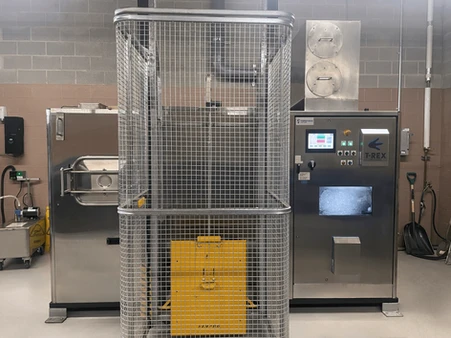
    The T-REX Composter is designed for busy, high-volume environments. It handles a constant flow of organic waste, including food scraps, prep waste, and certified compostable packaging. It processes the material into a nutrient-rich soil amendment and reduces the overall volume by up to 80 percent.

    Because it’s fully enclosed, there are no exposed piles or strong odors. It keeps operations clean and compact, which matters in a space-constrained environment like an airport.

    Reducing Emissions and Collection Costs

    Hauling food waste off-site takes fuel, time, and money. Every truck trip adds to the airport’s carbon footprint and increases costs. By composting on site, airports can avoid the emissions tied to transport and reduce reliance on outside service providers.

    For airports working toward net zero targets or trying to improve emissions reporting, this is one of the simplest and most direct changes they can make.

    Cleaner Sorting, Less Contamination

    When composting is done in-house, it gives staff, food vendors, and partners a clear path for separating organics. Sorting becomes easier and more accurate, which leads to cleaner streams and better diversion outcomes.

    Airports like YVR and SFO have seen success by pairing infrastructure with clear signage and ongoing training. The presence of an on-site composting reinforces the importance of proper sorting and reduces landfill-bound waste.

    A Visible Step Toward Sustainability

    Passengers are more environmentally aware than ever. When an airport takes visible action on sustainability, it builds trust and shows leadership. On-site composting is one of those actions that is both functional and symbolic.

    Some airports are already using the output soil amendment as compost in their own landscaping. It closes the loop, keeps the material on site, and turns waste into something useful and visible.

    Better Tracking and Data for Goals

    The T-REX Composter can be connected to monitoring tools that track input weight, processing rates, and diversion volumes. This data supports sustainability teams reporting concrete results.

    Instead of estimating impact, airports can track performance in real time and make adjustments as needed. It also supports programs like Airport Carbon Accreditation and broader climate action plans.

    More Control Over Waste Operations

    By composting on site, airports gain more control over their own operations. If haulers are delayed or off-site processors are unavailable, having equipment on the ground keeps things running smoothly.

    This added resilience helps reduce disruptions and makes the entire waste management system more reliable.

    Airports around the world are taking a closer look at how they manage food waste. On-site composting is proving to be a straightforward and effective solution. With the T-REX Composter, the shift is not only possible but also practical.

    If your airport is looking for ways to reduce waste, cut emissions, and build a more sustainable operation, composting on site is a smart place to start.
  • What Happens to the End Product of On-site Composting?

    What Happens to the End Product of On-site Composting?

    One of the most frequently asked questions we hear is: What can actually be done with the end product of on-site composting? The answer, like many things in sustainability, depends on the site, and the system in place to manage it.

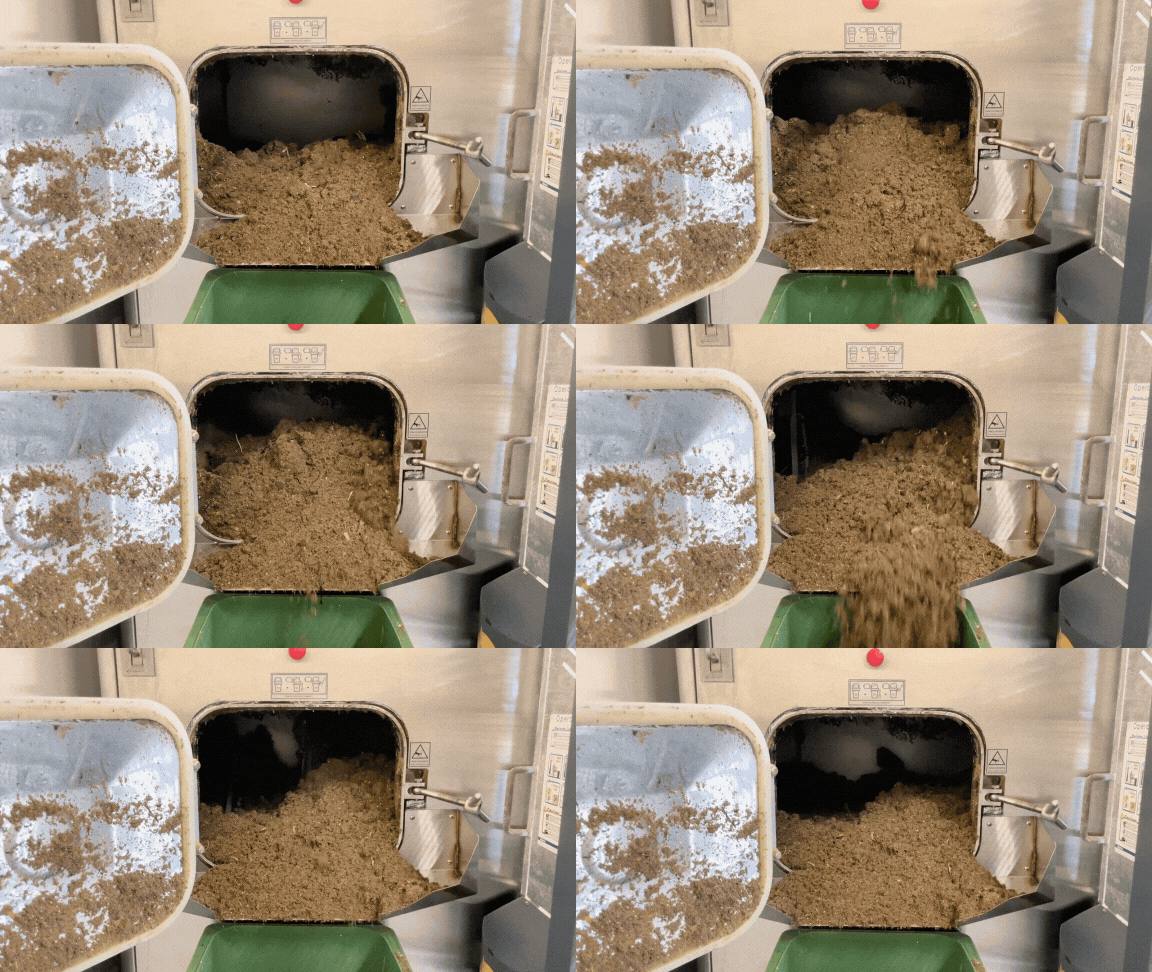
    At the core of on-site composting solutions is the production of soil amendment, a material rich in nitrates and other nutrients. However, this product isn’t quite compost yet. It typically requires time outside of the composter to properly cure, maturing into a stable, usable compost product. This phase is essential, especially if the end goal is to utilize it for landscaping, gardening, or green space maintenance.

    But curing requires space, and not every site has that luxury. On top of that, most commercial facilities generate far more soil amendment than they can realistically use.

    Ideally, sites can process all organic waste and reuse the resulting compost directly on their property or through community partners, creating a fully integrated closed-loop system. While many organizations aspire to manage their own outputs, the reality is that this isn’t always practical.

    Instead, we often see sites utilizing only a small portion of their compost outputs. Producing and applying compost in-house also requires dedicated space, time, and staff capacity, which introduces an entirely new layer of operational management that may not be feasible for every team.

    For operations like shopping centers, hospitals, or airports with limited storage or landscaping needs, managing the amendment on-site may not be feasible. These sites must consider how to close the loop through other practical and scalable end-use options.

    The Hybrid Model: On-site + Traditional Composting

    For many facilities, the most effective solution lies in a hybrid approach: using On-site composters to reduce organic waste volume before sending the remaining soil amendment to a centralized industrial composting facility.

    This model brings two major benefits:

    1. Reduced Hauling Costsand Emissions
      On-site composting can reduce the volume of organic waste by up to 80%, significantly cutting down the need for frequent hauling. Unlike raw organic waste, which must be removed regularly to avoid issues like odors and pests, soil amendment produced through on-site composting is more stable and easier to store. This allows facilities to hold material onsite for longer periods without the challenges associated with storing unprocessed organics.
      By reducing both volume and the urgency of removal, sites can schedule fewer hauls, lowering operational costs and emissions from transportation.
    2. Improved Diversion of Compostable Packaging
      Industrial composting facilities can reject commercial organic loads contaminated with compostable and non-compostable packaging. With the rise of look-alike compostable—items that appear compostable but aren’t—it’s becoming harder for these facilities to ensure clean streams. This leads to entire organics loads being landfilled due to contamination.
      On-site composters offer a key advantage in addressing this challenge. They can process compostable packaging materials on-site, breaking them down along with food waste into a soil amendment. Once in this form, the material is significantly less likely to be flagged or rejected by traditional composting facilities.
      Because on-site composting systems typically operate under more controlled conditions, facilities are better positioned to verify and manage the types of compostable packaging being used. This makes it far easier to ensure only accepted materials enter the stream, reducing the burden on end processors and increasing overall diversion. In short, breaking it down at the source creates a cleaner, more reliable output, and keeps more compostable out of the landfill.

    Why Closing the Loop Matters

    By integrating on-site composting systems with traditional composting infrastructure, organizations can improve waste diversion rates, reduce emissions, and support cleaner processing practices.

    More importantly, it allows for flexibility. Whether you’re a facility with ample land and landscaping needs or a high-density commercial site with limited space, there’s a pathway to creating a closed-loop organics system that works for you.

    In a time when landfills are reaching their limits and climate targets are tightening, every percentage of diverted waste counts. And when we think realistically about where the end product goes and the benefits of each pathway, we take another important step toward a truly sustainable system.

  • Mapleview Shopping Centre Turns Sustainability Goals into Real Savings with On-Site Composting

    Mapleview Shopping Centre Turns Sustainability Goals into Real Savings with On-Site Composting

    At Mapleview Shopping Centre, sustainability is more than just a buzzword—it’s a mission that drives real change. Faced with the challenge of high organic waste hauling costs, and ambitious sustainability goal of achieving 80% waste diversion and achieving Net Zero Carbon by 2040, they needed to find a way to meet their environmental goals while keeping their operations efficient. The solution came with the introduction of on-site composting, which not only aligned with their sustainability vision but also resulted in significant cost savings.

    Sustainability That Pays Off

    Traditional methods of hauling organic waste long distances were expensive and counterproductive to their emissions reduction goals. By processing organic waste on-site with the T-REX Composter, Mapleview reduced transportation needs, cut emissions, and made substantial progress toward their waste diversion targets.

    Within the first few months of the T-REX’s operation, Mapleview Shopping Centre reduced their organics hauling frequency from twice a week to once every two weeks, cutting organics hauling costs by 75%. They are on track to achieve substantial savings within their first year of operation.

    The integration of the T-REX Composter has proven to be a game-changer in their sustainability efforts. It’s an example of how smart solutions can turn environmental responsibility into operational efficiency, and how investing in green technology can yield both environmental and financial returns.

    Shifting Mindsets Across the Centre

    The impact of the on-site composting program goes beyond just logistics. Positioned in a visible, high-traffic area within the building, the T-REX Composter has sparked a shift in how tenants and staff approach waste management. Having the system in a central location fosters engagement and responsibility among tenants, helping to ensure proper waste sorting.

    Small but impactful changes, like adding magnets to bins to catch stray cutlery, helped reduce contamination levels, which have dropped significantly. This improvement has ensured that the compost produced is of the highest quality, reinforcing Mapleview’s commitment to sustainability and operational excellence.

    Building a Circular Future

    Mapleview is not stopping here. Looking ahead, they plan to introduce Hosted Sorting Stations for food court waste, further increasing their diversion rates and reducing the amount of waste sent to landfills. These stations will be managed by staff to ensure all consumer waste is correctly sorted into appropriate categories, significantly reducing contamination and capturing food waste that would have otherwise ended up in the garbage. 

    They are also exploring partnerships with local gardens to distribute the high-quality compost, keeping the benefits within the community and reducing external hauling even further. These efforts align with their broader vision of creating a circular economy—where waste is transformed into a resource and sustainability becomes a natural part of business operations. 

    What’s Next for  Mapleview?

    Mapleview’s success story illustrates how sustainability can drive long-term value. By turning organic waste into a resource and cutting operational costs, they’ve positioned themselves as leaders in both environmental responsibility and business efficiency. They’ve proven that by making sustainable changes today, businesses can create lasting benefits for both the planet and their bottom line.

    Curious about how they did it? Download the full success story to dive deeper into how Mapleview achieved their sustainability goals and saved costs through on-site composting.

    Would On-Site Composting Work for Your Property?

    Take a quick quiz to see if an on-site composting solution could benefit your property:

    1. Does your property experience high hauling costs for organic waste?
    2. Are you aiming to reach specific sustainability or waste diversion targets?
    3. Would reducing the frequency of waste hauling trips improve your operations?
    4. Are you facing contamination issues with your current waste sorting methods?
    5. Do you want to increase tenant engagement in sustainability efforts?

    If you answered ‘Yes’ to any of these questions, on-site composting could be a smart, sustainable solution for your property.