
Tag: soil amendment

  • Biodiversity’s Role in Sustainable Waste Management

    Biodiversity’s Role in Sustainable Waste Management

    When people discuss sustainability, the conversation often focuses on carbon footprints, renewable energy, or recycling programs. One key part of the equation is often overlooked is biodiversity. From invisible microbes to essential insects and plants, biodiversity plays a powerful and often underappreciated role in how we manage waste in sustainable ways.

    What Is Biodiversity and Why Does It Matter?

    Biodiversity is the variety of life found in ecosystems. This includes everything from bacteria and fungi to plants, insects, and animals. In the context of waste management, biodiversity doesn’t just support nature in general. It directly helps break down, recycle, and renew organic materials.

    Nature already processes waste with impressive efficiency. When organic waste is handled properly, it becomes a valuable resource rather than something to throw away. That transformation happens because of the many living organisms working together in the system.

    Microbial Diversity Drives Decomposition

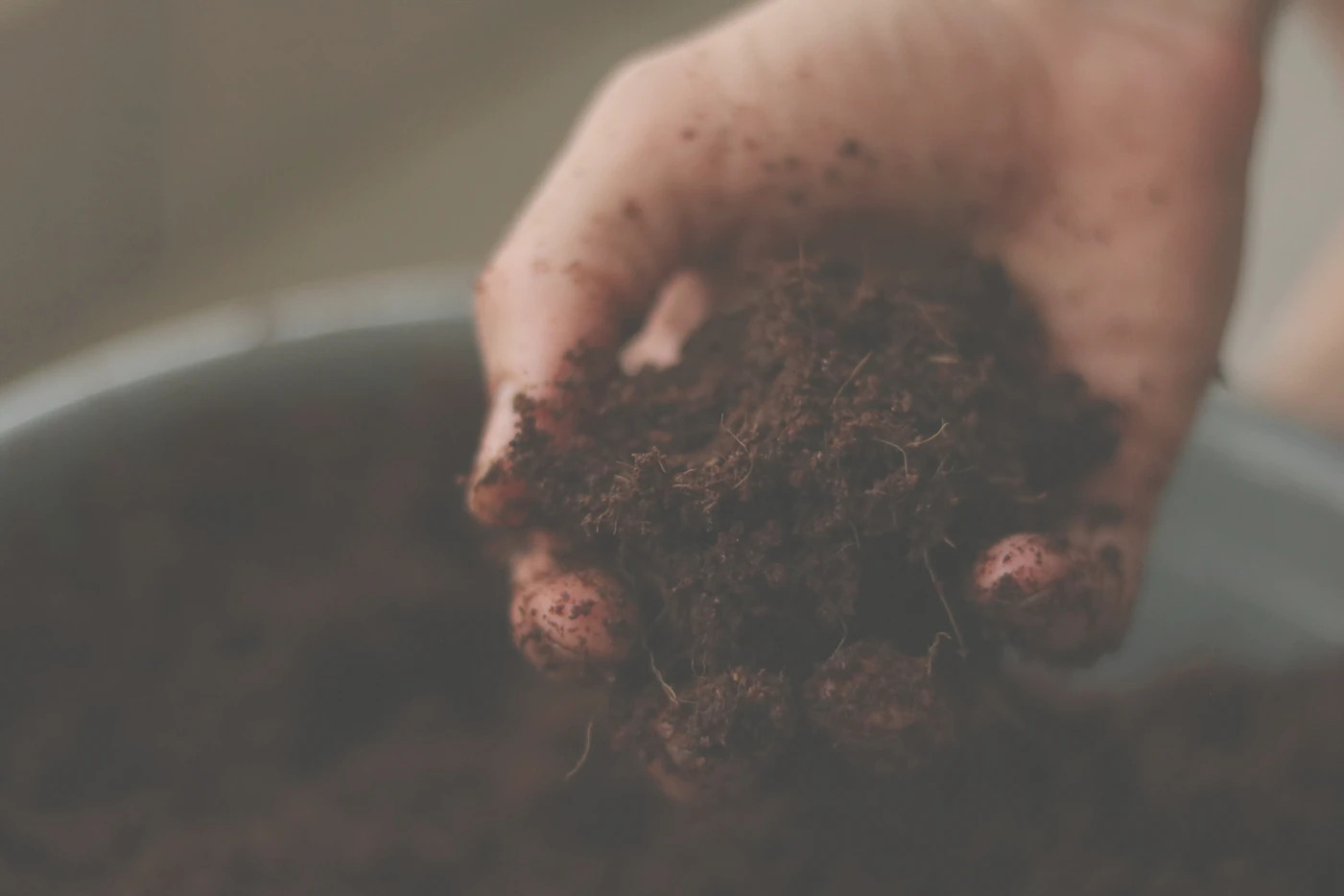
    A single handful of healthy compost contains billions of microorganisms. These include bacteria, fungi, and protozoa. Each one has a specific job in breaking down organic matter and turning it into stable, nutrient-rich compost.

    The more diverse these microbes are, the better they are at breaking things down. A rich microbial community adapts more easily to changes, produces fewer odors, and results in higher-quality compost. These tiny organisms may be invisible, but they are essential to the entire process.

    Insects and Decomposers Do the Heavy Lifting

    Larger soil organisms like insects and earthworms also play a key role. Earthworms help mix and aerate compost, which allows oxygen to flow and supports microbial activity. Insects like beetles and ants break down materials into smaller pieces in nature, making it easier for microbes to continue the process.

    These creatures do best in healthy, chemical-free environments. When biodiversity is protected, these decomposers thrive and help turn organic waste into something useful and sustainable.

    Plant Diversity Supports Healthy Waste Cycles

    Biodiversity above ground is just as important. Different types of plants have varied root systems that improve soil structure, help absorb nutrients, and create space for helpful organisms to live.

    When compost is used in areas with a wide mix of plants, the impact is even greater. Soil holds water better, nutrients cycle more efficiently, and the whole ecosystem becomes healthier. Compost supports biodiversity, and in return, biodiversity strengthens the effectiveness of compost.

    Threats to Biodiversity in Waste Systems

    Many modern farming and industrial practices unintentionally damage biodiversity. Using synthetic fertilizers and pesticides can sterilize the soil and kill helpful organisms. Monoculture farms, which grow just one type of crop, often create waste that lacks the variety of nutrients needed for rich compost.

    What Can Businesses and Communities Do?

    The good news is that protecting biodiversity in waste systems doesn’t require massive changes. Small, thoughtful choices can make a big difference. Here are some simple actions to consider:

    • Limit chemical use. Avoid pesticides and synthetic fertilizers that harm the organisms in soil.
    • Plant native species. Native plants help maintain ecological balance and support pollinators and decomposers.
    • Support regenerative practices. Choose to work with suppliers and farmers who value soil health and biodiversity.
    • Educate others. Help teams and communities understand how biodiversity improves waste management.

    How to Monitor Biodiversity in Waste Systems

    Monitoring biodiversity doesn’t have to be complicated. Here are some simple ways to observe the health of your composting or organic waste system:

    • Look for visible life. Earthworms, beetles, ants, and other small insects are clear signs that your system supports decomposers. Fungal threads or mold-like patches can also indicate healthy biological activity.
    • Pay attention to compost quality. Healthy compost is dark, crumbly, and smells earthy, not sour nor rotten. This suggests microbes and decomposers are doing their jobs well.
    • Notice how quickly waste breaks down. When organic matter decomposes at a steady pace without clumps of unfinished material, it often means the system has a balanced and active community of organisms.
    • Use a simple observation checklist. Recording what you see over time—types of insects, presence of worms, texture of compost—can help you notice patterns and spot issues early.

    These basic checks can be done without special equipment and provide a reliable snapshot of your system’s biological health.

    Conclusion

    Biodiversity is more than just an environmental concept. It is a living system that powers sustainability from the ground up. When we align waste management with nature, our systems become more efficient, more resilient, and more capable of renewal.

    Protecting biodiversity is not only good for the environment. It is also a smart, practical approach to managing organic waste. By working with nature, we can turn waste into a resource and create systems that support life in all its forms.


  • How Zoos Can Use On-Site Composting to Reduce Waste

    How Zoos Can Use On-Site Composting to Reduce Waste

    Zoos are in a strong position to integrate sustainability into daily operations, especially when it comes to managing organic waste. With a steady flow of food scraps, animal bedding, manure, and yard trimmings,on-site composting with a system like the T-REX Composter gives zoos a practical way to manage waste, reduce environmental impact, and produce useful compost for landscaping and animal care.

    Smarter Waste Management at the Source

    Zoos generate a large volume of organic waste from food, manure, and plant material. Composting this waste on-site helps reduce what ends up in landfills and supports zero-waste goals. The T-REX Composter processes organic material efficiently and safely, producing nutrient-rich compost that can be used throughout the property.

    It also improves daily conditions. On-site composting reduces odors and helps deter pests, creating a cleaner, more comfortable space for animals, staff, and visitors.

    A Natural Fit for Conservation-Focused Operations

    Zoos are built around conservation. Composting aligns with that mission by turning waste into a resource, lowering reliance on outside materials, and keeping more waste on-site. The compost can be used in gardens, habitat restoration, or general landscaping, reducing the need for chemical fertilizers and outside soil amendments.

    This kind of closed-loop system shows that the zoo’s sustainability efforts are more than just messaging. They’re part of the day-to-day approach to responsible care and operations.

    Bringing Sustainability into the Visitor Experience

    Zoos already serve as educational spaces. On-site composting adds another layer to that mission. Whether through signage, tours, or interactive exhibits, zoos can show how organic waste is turned into soil that helps the facility thrive.

    On-site composting demonstrations or behind-the-scenes tours can help visitors understand how everyday waste can be reused instead of discarded. These small learning moments leave a strong impression and may inspire guests to explore composting at home.

    Lowering Waste Costs Without Compromise

    Hauling organic waste off-site is costly, especially for large operations. On-site composting helps zoos reduce those hauling costs and rely less on outside waste services. That saved money can be redirected into animal care, conservation, or facility upgrades.

    The T-REX Composter is designed to handle large volumes with minimal staff input. Its ease of use and low maintenance make it a practical choice for busy environments like zoos.

    A Simple and Effective Composting Solution

    Built for daily use, the T-REX Composter is fully enclosed to manage odors and keep pests out. Its efficiency allows it to handle large amounts of waste, turning it into compost that can be used across the grounds.

    The system is easy to operate and scales to match the volume of waste produced. It fits seamlessly into zoo operations without disrupting routines or requiring extensive staff training.

    Making a Lasting Impact

    By adopting composting, zoos reduce their environmental footprint, lower waste management costs, and support conservation from the ground up. It’s a practical step that aligns with the values zoos already promote.

    Guests see the results of these efforts in cleaner spaces, healthier landscapes, and stronger connections to the zoo’s mission. Composting may not be front and center, but it plays an important role in how zoos care for their spaces and the planet.

  • Why Should Resorts Choose On-Site Composting

    Why Should Resorts Choose On-Site Composting

    As sustainability becomes more important in the hospitality world, resorts are looking for straightforward ways to shrink their environmental footprint. One practical option is on-site composting. With a system like the T-REX Composter, resorts can manage their food scraps and landscaping waste on-site, cut down on hauling costs, and produce soil amendment that can go right back into the property’s gardens. It’s a simple solution that supports both the environment and the expectations of today’s more eco-conscious guests.

    Sustainability Matters to Today’s Travelers

    More and more travelers are looking for places to stay that reflect their values. It’s not just about luxury anymore. People want to see that resorts are making an effort when it comes to sustainability. Composting is one clear way to show that. Food waste from restaurants, trimmings from the grounds, even coffee grounds from the café, can all be handled on-site using the T-REX Composter.

    Guests often notice the little things, like signs explaining how waste is reused or walking paths that highlight native plant gardens fed by compost. These kinds of touches show that the resort isn’t just talking about sustainability but actually doing something about it.

    Saving on Waste Hauling and Reducing Emissions

    For many resorts, especially ones in remote areas, getting rid of waste isn’t cheap. Hauling organic waste off-site can rack up serious costs. On-site composting cuts that down. With the T-REX system, organic waste is processed right where it’s created, which means fewer trips by waste trucks and a smaller carbon footprint.

    And the compost doesn’t go to waste. It can be used to improve the soil in gardens, lawns, and green spaces, reducing the need for chemical fertilizers. Less waste in landfills, healthier landscaping, and real savings over time, a win all around.

    Turning Waste Into Healthier Landscapes

    Landscaping is a big part of the guest experience. Guests notice the look and feel of the grounds the moment they arrive. Compost made on-site helps keep those green spaces lush and healthy, without relying on synthetic fertilizers.

    The result is soil that holds water better, supports stronger plants, and contributes to a better-looking property overall. And because the compost is made from the resort’s own waste, it closes the loop and makes landscaping more sustainable.

    Easy to Use and Built for Daily Use

    The T-REX Composter is designed to be simple to operate. Staff can learn how to use it quickly, and it doesn’t take much to keep it running. The enclosed design keeps smells down and pests out, so it can be tucked into operations without causing issues.

    It’s built to handle a lot of material each day, so even busy resorts can keep up. And because everything happens on-site, the compost is always available when it’s needed, no ordering, no waiting, no waste.

    Helping Resorts Meet Sustainability Goals

    A lot of resorts are working toward big sustainability targets, reducing waste, cutting emissions, and earning green certifications. Composting can help move those goals forward. Instead of sending food and yard waste to the landfill, that material is turned into something useful.

    And beyond the numbers, it sends a strong message. Guests see that the resort is making real changes, not just talking about them. That kind of transparency and effort matters more and more to travelers. Composting is one small piece of a much bigger picture, but it’s a solid place to start.

  • Composting Food Waste at Airports Starts with the Right Tools

    Composting Food Waste at Airports Starts with the Right Tools

    Airports generate a lot of food waste. Between terminal restaurants, lounges, catering services, and staff kitchens, it adds up quickly. Managing that organic waste isn’t just a logistical issue. It’s also a chance to make a real environmental impact.

    More airports are now looking at composting food waste where it’s produced. Instead of hauling it off-site, they’re using equipment that lets them handle the process in-house. With the right system in place, on-site composting becomes part of the daily routine.

    A Practical Fit for Airport Operations

    The T-REX Composter is designed for busy, high-volume environments. It handles a constant flow of organic waste, including food scraps, prep waste, and certified compostable packaging. It processes the material into a nutrient-rich soil amendment and reduces the overall volume by up to 80 percent.

    Because it’s fully enclosed, there are no exposed piles or strong odors. It keeps operations clean and compact, which matters in a space-constrained environment like an airport.

    Reducing Emissions and Collection Costs

    Hauling food waste off-site takes fuel, time, and money. Every truck trip adds to the airport’s carbon footprint and increases costs. By composting on site, airports can avoid the emissions tied to transport and reduce reliance on outside service providers.

    For airports working toward net zero targets or trying to improve emissions reporting, this is one of the simplest and most direct changes they can make.

    Cleaner Sorting, Less Contamination

    When composting is done in-house, it gives staff, food vendors, and partners a clear path for separating organics. Sorting becomes easier and more accurate, which leads to cleaner streams and better diversion outcomes.

    Airports like YVR and SFO have seen success by pairing infrastructure with clear signage and ongoing training. The presence of an on-site composting reinforces the importance of proper sorting and reduces landfill-bound waste.

    A Visible Step Toward Sustainability

    Passengers are more environmentally aware than ever. When an airport takes visible action on sustainability, it builds trust and shows leadership. On-site composting is one of those actions that is both functional and symbolic.

    Some airports are already using the output soil amendment as compost in their own landscaping. It closes the loop, keeps the material on site, and turns waste into something useful and visible.

    Better Tracking and Data for Goals

    The T-REX Composter can be connected to monitoring tools that track input weight, processing rates, and diversion volumes. This data supports sustainability teams reporting concrete results.

    Instead of estimating impact, airports can track performance in real time and make adjustments as needed. It also supports programs like Airport Carbon Accreditation and broader climate action plans.

    More Control Over Waste Operations

    By composting on site, airports gain more control over their own operations. If haulers are delayed or off-site processors are unavailable, having equipment on the ground keeps things running smoothly.

    This added resilience helps reduce disruptions and makes the entire waste management system more reliable.

    Airports around the world are taking a closer look at how they manage food waste. On-site composting is proving to be a straightforward and effective solution. With the T-REX Composter, the shift is not only possible but also practical.

    If your airport is looking for ways to reduce waste, cut emissions, and build a more sustainable operation, composting on site is a smart place to start.

  • Why On-Site Composting with the T-REX Composter Is a Smart Move for Universities

    Why On-Site Composting with the T-REX Composter Is a Smart Move for Universities

    Across North America and beyond, colleges and universities are making sustainability a priority. From climate action plans to zero waste targets, institutions are looking for practical ways to shrink their environmental footprint. One area that often gets overlooked, but holds major potential, is food and organic waste.

    Campus kitchens, dining halls, residences, and grounds crews generate a steady stream of compostable material every day. Instead of sending it off-site, or worse, to the landfill, more universities are turning to on-site composting as a hands-on solution.

    That’s where the T-REX Composter comes in. Built for high-volume use, this industrial system turns food scraps and other organics into nutrient-rich compost, right on campus. For universities aiming to cut waste and back up their sustainability goals with action, the T-REX offers a clear, practical step forward.

    Cuts Down on Hauling and Off-Site Processing

    One of the biggest challenges with organic waste is moving it. Trucking food waste to distant composting sites adds up, including fuel, labour, emissions, and scheduling headaches. On-site composting takes most of that out of the equation.

    With a T-REX Composter, waste is processed right where it’s produced. That means fewer trucks, less fuel, and no third-party processing fees. Over time, those savings add up, not just in dollars, but in reduced carbon emissions too.

    Turns Food Waste Into a Useful Resource

    One of the most immediate upsides to composting on campus? The end product. The compost created by the T-REX is a rich, soil amendment that’s ideal for use in campus landscaping, gardens, and greenhouses.

    Many universities are already putting this compost to work, in campus gardens, agriculture programs, and groundskeeping. It’s a great example of a closed-loop system where waste becomes a resource, right where it started.

    Engages Students and Adds Learning Opportunities

    Universities are places where ideas are tested, and composting fits right into that spirit. On-site composting often become part of the curriculum, research, or student-led initiatives.

    Students in environmental science, biology, engineering, or sustainability programs get hands-on experience with composting systems. Others might help run awareness campaigns, track data, or develop educational signage around waste stations. In many cases, student advocacy is what gets these systems on campus in the first place.

    The T-REX becomes more than just a machine, it’s a learning tool, a project hub, and a way to connect theory to real-world action.

    Supports Climate and Zero Waste Goals

    Almost every university today has some kind of climate or sustainability plan, and composting plays a direct role in hitting those targets.

    When organic waste ends up in landfills, it breaks down without oxygen, releasing methane, a greenhouse gas far more potent than CO2. Composting it instead reduces emissions and produces a valuable byproduct.

    Installing a T-REX Composter makes it easier to track and report on metrics like waste diversion, and sustainability certifications (like LEED). It also gives schools a tangible step to show they’re making progress.

    Cleaner, Easier, and More Scalable Than Traditional Composting

    Forget the image of smelly compost piles or messy bins. The T-REX Composter is fully enclosed, odor-controlled, and automated. It’s designed to handle large volumes with minimal hassle.

    Because it’s a sealed system, it prevents issues like pests, smells, or runoff. It’s faster than traditional composting, and much easier to manage. Staff can monitor it remotely and tweak settings as needed, no pitchforks required.

    That makes it a great fit for campuses with limited space, lots of foot traffic, or strict cleanliness standards. It blends into operations without creating extra work.

    Helps Shift Universities Cultures

    When composting is visible and part of everyday campus life, it starts to influence behavior. Students and staff are more likely to sort waste properly when they know where it’s going, and that it’s staying on-site.

    This kind of change builds over time. Composting can lead to better waste habits, more awareness of sustainability programs, and a greater sense of shared responsibility. It’s also something students and staff can take pride in.

    Many schools feature their composting efforts in campus tours, marketing materials, and annual reports. It’s a way to show prospective students and the wider community that sustainability isn’t just a buzzword, it’s part of how the campus runs.

    Prepares Campuses for Future Regulations

    Across the continent, food waste laws are getting stricter. Some cities and provinces are banning organics from landfills or requiring composting programs for institutions.

    Installing an on-site composting like the T-REX helps schools stay ahead of the curve. It’s a long-term investment that builds resilience, keeps campuses in compliance, and shows leadership in sustainable operations. And by getting started now, schools can ease into new regulations without scrambling to catch up later.

    A Practical Step Toward a Greener Campus

    On-site composting with the T-REX is more than just a waste solution. It’s an investment in campus sustainability, student engagement, and operational efficiency. It saves money, supports campus agriculture, and helps meet climate goals while keeping waste out of landfills.

    For schools ready to take action, the T-REX offers a practical, proven way to rethink food waste. Sometimes, change starts right where your waste ends.

  • What Happens to the End Product of On-site Composting?

    What Happens to the End Product of On-site Composting?

    One of the most frequently asked questions we hear is: What can actually be done with the end product of on-site composting? The answer, like many things in sustainability, depends on the site, and the system in place to manage it.

    At the core of on-site composting solutions is the production of soil amendment, a material rich in nitrates and other nutrients. However, this product isn’t quite compost yet. It typically requires time outside of the composter to properly cure, maturing into a stable, usable compost product. This phase is essential, especially if the end goal is to utilize it for landscaping, gardening, or green space maintenance.

    But curing requires space, and not every site has that luxury. On top of that, most commercial facilities generate far more soil amendment than they can realistically use.

    Ideally, sites can process all organic waste and reuse the resulting compost directly on their property or through community partners, creating a fully integrated closed-loop system. While many organizations aspire to manage their own outputs, the reality is that this isn’t always practical.

    Instead, we often see sites utilizing only a small portion of their compost outputs. Producing and applying compost in-house also requires dedicated space, time, and staff capacity, which introduces an entirely new layer of operational management that may not be feasible for every team.

    For operations like shopping centers, hospitals, or airports with limited storage or landscaping needs, managing the amendment on-site may not be feasible. These sites must consider how to close the loop through other practical and scalable end-use options.

    The Hybrid Model: On-site + Traditional Composting

    For many facilities, the most effective solution lies in a hybrid approach: using On-site composters to reduce organic waste volume before sending the remaining soil amendment to a centralized industrial composting facility.

    This model brings two major benefits:

    1. Reduced Hauling Costsand Emissions
      On-site composting can reduce the volume of organic waste by up to 80%, significantly cutting down the need for frequent hauling. Unlike raw organic waste, which must be removed regularly to avoid issues like odors and pests, soil amendment produced through on-site composting is more stable and easier to store. This allows facilities to hold material onsite for longer periods without the challenges associated with storing unprocessed organics.
      By reducing both volume and the urgency of removal, sites can schedule fewer hauls, lowering operational costs and emissions from transportation.
    2. Improved Diversion of Compostable Packaging
      Industrial composting facilities can reject commercial organic loads contaminated with compostable and non-compostable packaging. With the rise of look-alike compostable—items that appear compostable but aren’t—it’s becoming harder for these facilities to ensure clean streams. This leads to entire organics loads being landfilled due to contamination.
      On-site composters offer a key advantage in addressing this challenge. They can process compostable packaging materials on-site, breaking them down along with food waste into a soil amendment. Once in this form, the material is significantly less likely to be flagged or rejected by traditional composting facilities.
      Because on-site composting systems typically operate under more controlled conditions, facilities are better positioned to verify and manage the types of compostable packaging being used. This makes it far easier to ensure only accepted materials enter the stream, reducing the burden on end processors and increasing overall diversion. In short, breaking it down at the source creates a cleaner, more reliable output, and keeps more compostable out of the landfill.

    Why Closing the Loop Matters

    By integrating on-site composting systems with traditional composting infrastructure, organizations can improve waste diversion rates, reduce emissions, and support cleaner processing practices.

    More importantly, it allows for flexibility. Whether you’re a facility with ample land and landscaping needs or a high-density commercial site with limited space, there’s a pathway to creating a closed-loop organics system that works for you.

    In a time when landfills are reaching their limits and climate targets are tightening, every percentage of diverted waste counts. And when we think realistically about where the end product goes and the benefits of each pathway, we take another important step toward a truly sustainable system.

  • Fostering a Green Company Culture Through Employee Engagement in Sustainability

    Fostering a Green Company Culture Through Employee Engagement in Sustainability

    Sustainability isn’t just a talking point—it’s a practical necessity for companies aiming to thrive while making a positive impact. But sustainability efforts are only as strong as the people behind them. That’s why engaging employees is critical, and the T-REX Composter provides the perfect tool to bring sustainability to life. By turning food waste into nutrient-rich compost on-site, the T-REX Composter makes sustainability tangible, empowering employees to actively participate in reducing waste and improving environmental outcomes.

    Hands holding a wooden tray with three small plant seedlings in brown pots. Neutral background, focus on growth and nurturing. Cultivating green company culture.

    Why the T-REX Composter Drives Employee Engagement

    A Hands-On Sustainability Tool

    The T-REX Composter turns sustainability into something employees can see, touch, and contribute to daily. Instead of simply disposing of food waste, employees become part of a process that transforms waste into valuable compost. However, it’s important to note that only designated operators are authorized to run the machine. This ensures safe and efficient operation while maintaining employee involvement in waste separation and sustainability efforts.

    A Visible Commitment to Sustainability

    When employees see a T-REX Composter in action, it’s a clear signal that the company is serious about reducing its environmental footprint. Unlike temporary campaigns or generic recycling programs, the T-REX Composter is a long-term, impactful solution that shows sustainability is embedded in the company’s operations—not just a box to check.

    Inspiring Innovation and Ownership

    Employees involved in waste separation and tracking composting results often generate new ideas for reducing waste and utilizing compost effectively. Whether it’s streamlining waste collection or finding creative ways to use the finished compost, the T-REX Composter inspires innovation and gives employees a sense of ownership in sustainability initiatives.

    Building Team Spirit

    The T-REX Composter fosters collaboration. From organizing waste separation systems to tracking composting progress, employees work together to achieve sustainability goals. This teamwork boosts morale and strengthens bonds, creating a unified culture around shared environmental values.

    Making Sustainability Part of Daily Operations with the T-REX Composter

    Educate and Involve Employees

    Introduce the T-REX Composter to your team through hands-on demonstrations or workshops. Show them how food waste is processed and turned into compost, emphasizing the environmental and financial benefits. While employees play a key role in sustainability efforts, only trained operators handle the machine itself to ensure safety and compliance.

    Integrate Composting into Routine Tasks

    Make the T-REX Composter part of employees’ everyday workflows by establishing easy-to-use waste separation systems. While only operators manage the machine, employees can actively contribute by sorting waste properly and ensuring materials are compostable. This integration normalizes sustainability as a daily practice.

    Set Clear Goals and Track Progress

    Define measurable goals for your T-REX Composter, such as reducing landfill waste by a specific percentage or producing a certain amount of compost. Share progress with employees regularly to keep them engaged and celebrate milestones together.

    Encourage Employee-Led Initiatives

    Empower employees to take charge of sustainability projects, like managing waste streams or finding uses for the compost produced. While only trained operators can run the machine, broader employee involvement builds a sense of ownership and ensures the program’s long-term success.

    The T-REX Difference

    Adopting the T-REX Composter doesn’t just benefit the environment—it transforms your company’s approach to sustainability:

    • Tangible Environmental Impact: Divert significant amounts of organic waste from landfills while reducing greenhouse gas emissions.
    • Cost Savings: Eliminate or minimize waste hauling costs while generating a valuable soil amendment for landscaping or community projects.
    • Boosting Employee Engagement: Provide a practical way for employees to contribute to sustainability efforts, increasing their connection to the company’s mission.
    • Reputation Building: Demonstrate leadership in sustainability to customers, stakeholders, and the wider community.

    A Shared Mission

    Incorporating the T-REX Composter into your operations is more than an environmental initiative—it’s a catalyst for cultural change. By involving employees in waste transformation and sustainability efforts, you create a workplace where everyone feels invested in making a difference. While the T-REX is operated exclusively by trained personnel, its presence and impact inspire employee engagement in sustainability. The T-REX Composter isn’t just a tool; it’s a bridge between company goals and employee action, driving meaningful progress for your business and the planet.

  • Boosting Soil Health and Odor Management with On-Site Composting

    Boosting Soil Health and Odor Management with On-Site Composting

    As businesses strive for more sustainable and efficient operations, on-site composting is gaining traction as a powerful tool. Beyond minimizing waste and cutting down on hauling costs, this approach brings two often-overlooked but crucial benefits, improved soil health and effective odor management. Below are some of the reasons why these advantages are encouraging more companies to switch to on-site composting and how they can transform your sustainability strategy.

    Hidden Benefit of On-Site Composting ― Nurturing Soil Health

    Healthy soil is the unsung hero behind thriving landscapes and agricultural productivity. On-site composting turns your organic waste into a nutrient-rich soil amendment resource that enriches soil structure, supports beneficial microorganisms, and promotes long-term soil health in the right conditions. Unlike chemical fertilizers that may deliver a short-lived boost but risk depleting the land over time, soil amendment fosters a balanced, regenerative environment.

    The soil amendment created through on-site organics and post-consumer packaging composting helps improve water retention and soil aeration, which in turn leads to healthier plant growth and greater resilience against erosion. For businesses with landscaping needs or agricultural interests, this results in robust, fertile soil that supports sustainable growth year after year. The process of transforming waste into a valuable soil amendment embodies a circular approach to sustainability that not only reduces waste but enhances natural ecosystems.

    Debunking Odor Management Myths

    A common misconception about composting is that it comes with inevitable, off-putting odors. However, on-site composting can be managed effectively to keep odor concerns at bay. By maintaining a balance of carbon-rich and nitrogen-rich materials and ensuring proper aeration, businesses can create the ideal environment for composting that minimizes unwanted smells.

    The advantage of on-site composting over traditional waste handling methods lies in the control it offers. When organic waste is left to sit for days before being transported, decomposition can lead to unpleasant odors that affect operations and relationships with neighboring properties. On-site composting systems address this by processing waste promptly, reducing the potential for odor development. This is especially important for businesses operating in urban or densely populated areas where maintaining a clean and pleasant environment is a priority.

    Why It Matters for Your Business

    Adopting on-site composting isn’t just about being eco-friendly; it’s about making smarter, more resource-efficient choices that benefit your bottom line and your reputation. Enhanced soil health means sustainable landscaping or agricultural practices that align with a company’s commitment to the environment. Composting in-house adds value by producing a consistent supply of organic material that keeps soils healthy without relying on synthetic inputs.

    Effective odor control further strengthens your company’s operations by ensuring positive community interactions. Businesses that prioritize these aspects send a clear message that they’re committed to thoughtful, comprehensive waste management that considers both environmental impact and practical, day-to-day needs.

    Future of Sustainable Operations ― From Waste to Resource

    The shift to on-site composting is about more than reducing waste; it’s about redefining waste as a resource. By embracing composting practices that enhance soil health and manage odors efficiently, companies can transform their waste management from a cost aspect into a strategic advantage. This approach promotes sustainability, supports long-term growth, and solidifies the business as a leader in environmentally conscious practices.

    Elevate your waste management strategy and join the growing number of businesses transforming their sustainability game with on-site composting. Enhanced soil health and effective odor management aren’t just benefits—they’re the pillars of a smarter future.

  • Understanding the Composting Process: Transforming Food Waste Responsibly

    Understanding the Composting Process: Transforming Food Waste Responsibly

    Proper food waste management is vital for sustainability. Commercial composters like the T-REX Composter are designed to transform organic waste and post-consumer packaging into nutrient-rich compost quickly and in an environmentally friendly manner. Here’s an overview of the machine’s composting process.

    Key Components of the Composting Process

    1. Heat

    • Accelerated Breakdown: The machine uses heat to speed up the decomposition of organic materials and post-consumer packaging.
    • Pathogen Elimination: Elevated temperatures ensure rapid composting and help eliminate pathogens.

    2. Agitation

    • Even Decomposition: Continuous agitation mixes the organic waste and post-consumer packaging, promoting even decomposition.
    • Exposure to Heat and Bacteria: Agitation ensures all parts of the waste are exposed to heat and bacteria.

    3. Thermophilic Bacteria

    • High-Temperature Conditions: These bacteria thrive in high temperatures, typically between 41°C (105°F) and 70°C (160°F).
    • Rapid Decomposition: They efficiently break down organic material and post-consumer packaging, speeding up the composting process.
    • Pathogen Reduction: High temperatures maintained by thermophilic bacteria help kill harmful pathogens, ensuring safer compost.

    Composting Mechanism

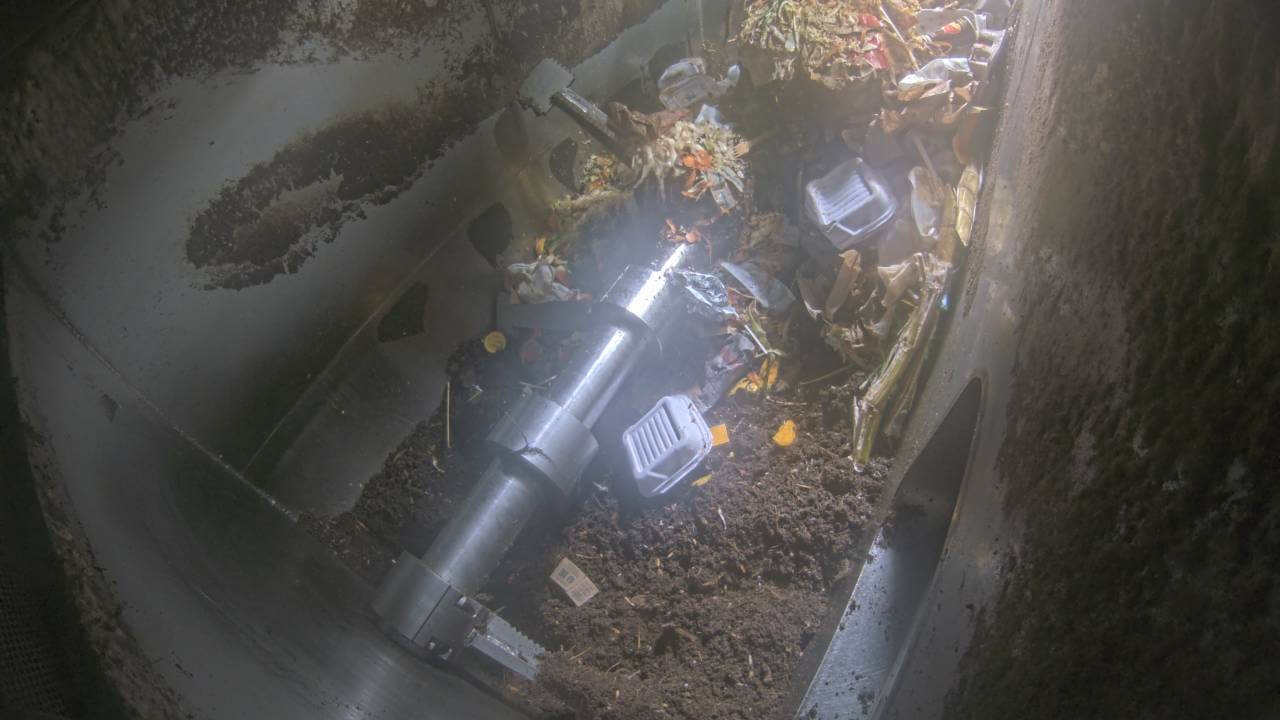
    • Input: The T-REX Composter processes a variety of organic waste, including small bones, eggshells, paper, and compostable post-consumer packaging. This diverse range of materials is essential for creating a balanced and nutrient-rich compost.
    • Process: The composter employs a combination of heat, continuous agitation, and specialized bacteria to break down the waste. This dry, aerobic setting does not require additional water or additives, making it an efficient and low-maintenance solution for food waste management.
    • Time: Remarkably, the T-REX Composter can break down waste in just 24 hours. This rapid turnaround is crucial for businesses needing quick and reliable waste disposal solutions.
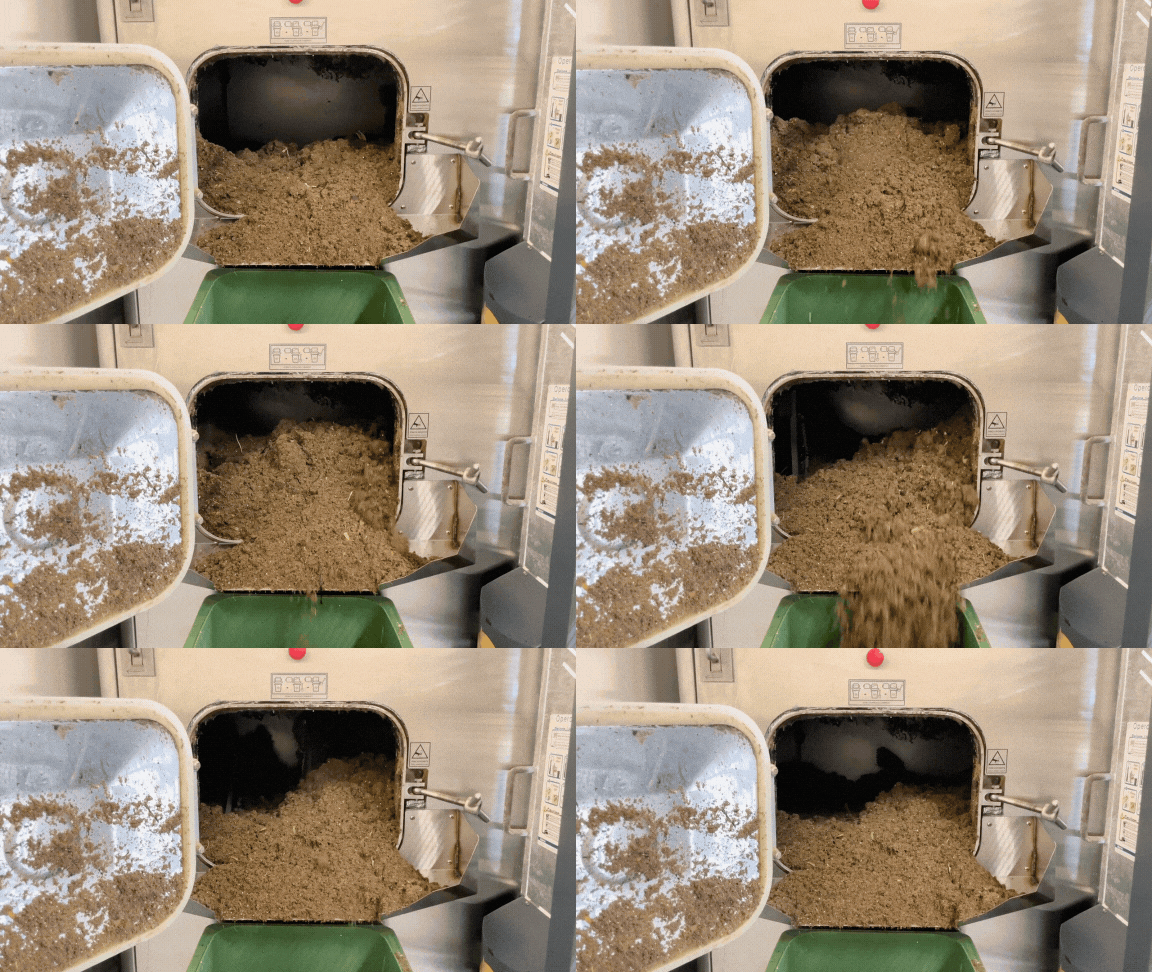
    • Output: The output product is an inert, odor-free, nutrient-rich immature compost that can be used as a soil amendment. The composting process reduces the volume of the original waste by up to 80%, significantly cutting down on the amount of waste that needs to be managed and disposed of.

    What is “Immature Compost”?

    The output of the T-REX Composter, also known as immature compost is organic material that has begun to decompose but is not yet fully stabilized. While it requires further composting to become mature compost, it can be used as a soil amendment if incorporated into the soil well before planting, allowing it to continue decomposing and stabilizing.

    Environmental Impact

    The composting process in commercial composters is aerobic, meaning it occurs in the presence of oxygen. This prevents the formation and emission of methane, a potent greenhouse gas. During composting, carbon dioxide and water are released as by-products, which are significantly less harmful compared to methane. By using this aerobic process, the T-REX Composters contribute to more sustainable food waste management solutions.

    In Conclusion

    Understanding the composting process in commercial machines is crucial for responsible food waste management. These machines utilize heat, agitation, and thermophilic bacteria to transform organic waste into nutrient-rich compost rapidly. By avoiding methane production and reducing waste volume by up to 80%, commercial composters offer an environmentally friendly solution for managing food waste. Embracing these advanced composting technologies will lead to more sustainable food waste solutions, contributing to a greener future.

  • Soil Amendment: What It Is and How to Use It

    Soil Amendment: What It Is and How to Use It

    Soil amendments are a crucial practice for those seeking to optimize the health of their agricultural and garden soils. While natural soil can be inconsistent in nutrient levels, texture, and water retention, the use of soil amendments helps address these issues. The T-REX Composter, with its advanced technology, provides a sustainable way to create high-quality soil amendments, transforming organic waste into a valuable resources.Comprehensive Maintenance Plan for Your T-REX Composter

    Understanding Soil Amendment

    Soil amendments are materials added to soil to improve its physical properties, nutrient content, and overall structure. Unlike fertilizers, which directly supply nutrients to plants, soil amendments enhance the soil’s capacity to support plant growth. This includes improving aeration, water retention, drainage, and nutrient availability. The T-REX Composter produces a rich compost that serves as an excellent soil amendment, offering a balanced blend of organic matter that boosts soil health.

    Why Soil Amendment Is Important

    Most soils are far from perfect. They can be too sandy, or simply lacking in organic matter. These conditions can lead to poor plant growth, waterlogging, or drought stress. Soil amendments help to address these issues by modifying the soil’s structure and composition. For instance, the compost generated by the T-REX Composter can loosen compacted soil, improving root penetration and water movement, while also helping sandy soils retain moisture and nutrients.

    How to Use Soil Amendment from the T-REX Composter

    Before applying any soil amendments, it’s essential to conduct a soil test to understand your soil’s needs. This will guide you in determining the right amount and type of amendment to use. Once you have your results, incorporating compost from the T-REX Composter is straightforward.

    For existing agricultural soils and garden beds, spread a layer of compost about 1-2 inches thick over the soil surface. Then, gently work it into the top few inches of soil. This method improves the soil structure and introduces essential nutrients gradually, promoting long-term soil fertility. In new areas with very poor soil, you can incorporate a thicker layer, around 2-4 inches, to give your plants the best possible start.

    The compost from the T-REX Composter is particularly effective because it is fully decomposed and rich in organic matter. It not only provides nutrients but also supports beneficial microbial activity in the soil, which is vital for plant health. Additionally, regular application of compost helps maintain soil structure, preventing compaction and ensuring that your plants receive the water and nutrients they need.

    Benefits of Regular Soil Amendment

    Using compost from the T-REX Composter as a soil amendment offers numerous benefits. It enhances soil fertility by adding essential nutrients and organic matter, improves soil texture, and increases the soil’s ability to retain moisture. Over time, this leads to healthier plants, higher yields, and a more resilient farmland and garden ecosystem.

    Moreover, by using compost as a soil amendment, you contribute to sustainable gardening practices. The T-REX Composter turns food scraps and other organic waste into a valuable resource, reducing landfill waste and promoting a circular approach to agriculture and gardening. This not only benefits your garden but also helps in conserving natural resources and protecting the environment.

    Soil Amendment gallery image

    In Summary

    Soil amendments are an essential practice for any farmer or gardener looking to improve soil health and plants. The T-REX Composter provides a convenient and eco-friendly way to produce high-quality compost, which can be used to amend your soil effectively. By regularly incorporating this compost into your land and garden, you can create a fertile, well-structured soil that supports plant growth and a thriving farmland and garden ecosystems.